DAILY NEWS

Stay Ahead, Stay Informed – Every Day

Advertisement
WATCH LIVE: Trump meets with Brazil’s Lula at the White House


RIO DE JANEIRO (AP) — Brazilian President Luiz Inácio Lula da Silva will discuss cooperation in the fight against organized crime and tariffs with U.S. President Donald Trump, Brazil’s finance minister Dario Durigan said Wednesday, one day ahead of the scheduled meeting between the presidents.
Trump is expected to host Brazil’s president for a bilateral meeting at 11:15 a.m. EDT. Watch it live in our video player above.
“The goal is to protect Brazil’s population, prioritize the country and maintain constructive dialogue,” Durigan told state broadcaster EBC. “Expectations for the trip are very positive.”
The encounter at the White House follows a crisis in bilateral relations last year, after the Trump administration imposed a 50% tariff on Brazilian goods and tied the measure to the prosecution of former President Jair Bolsonaro for his involvement in a coup plot.
Lula sharply defended Brazil’s sovereignty and Trump later loosened tariffs on Brazil as part of his effort to lower consumer costs for Americans.
READ MORE: Brazil gold mining rush brings deforestation and mercury risks to the Amazon
Trump and Lula started mending fences at the United Nations General Assembly in September, which was followed by their first private meeting in Malaysia in October and subsequent phone conversations.
The Brazilian government’s handling of the 50% tariff likely raised the country’s leverage with the Trump administration, said Ana Garcia, an international relations professor at the Rural Federal University of Rio de Janeiro.
“The Trump administration likely sees Brazil as a partner that must be taken somewhat seriously, but will continue to pressure it to make concessions,” Garcia said.
An ongoing point of contention between the two governments is the Trump administration’s reported consideration of designating Brazil’s largest criminal factions — Red Command, or CV, and the First Capital Command, or PCC — foreign terrorist organizations.
The designations would give the U.S. more power “to act as a political or economic actor in Brazil,” said Leonardo Paz Neves, an international relations professor at the Getulio Vargas Foundation, a think-tank and university. “It’s a defensive issue for Brazil that doesn’t serve Brazil’s interests at all.”
A Brazilian government official, who spoke on condition of anonymity as they are not allowed to discuss the matter publicly, said that both sides appeared to be committed to deepening cooperation on the fight against organized crime rather than opting for unilateral actions.
Another key item likely to be on the meeting’s agenda is access to Brazil’s rare earth deposits. The South American country has the world’s second-largest reserves of rare earth minerals, used in a wide range of products, including smartphones, electric vehicles, solar panels and jet engines.
Durigan on Wednesday again reiterated Brazil’s position that the nation does not want to be simply a raw material exporter.
“Countries in the global north … are thirsty for this raw material.” Durigan said. But “while foreign investment is welcome, we want industrial development within Brazil: creating jobs in partnership with our universities.”
The trip to the U.S. is taking place in a difficult domestic scenario for Lula, who last week suffered two blows dealt by Congress. The lower house overrode his veto on a law seeking to reduce Bolsonaro’s time in prison, while the Senate rejected his nomination to the Supreme Court — a first in more than 100 years.
The 80-year-old leader will seek a fourth, nonconsecutive term in the October elections. Polls currently show him neck to neck with Bolsonaro’s Senator son, Flávio.
Lula departed for Washington D.C. early afternoon local time Wednesday, and is expected to arrive in the evening.

A free press is a cornerstone of a healthy democracy.

Support trusted journalism and civil dialogue.

Donate now


Source link
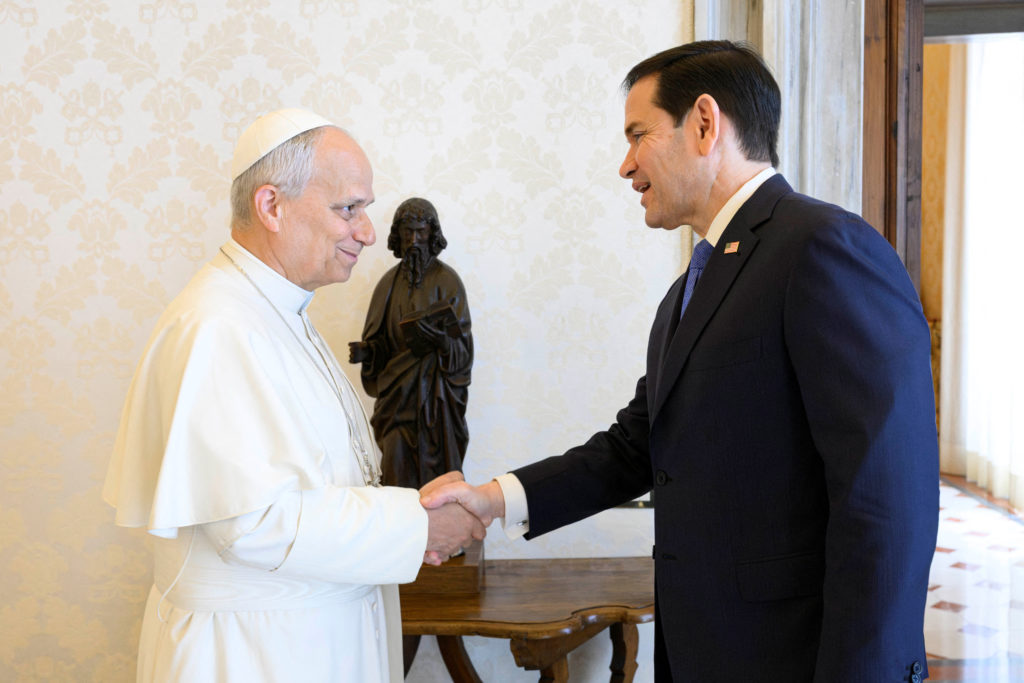
At Vatican, Rubio discusses efforts to achieve Middle East peace


VATICAN CITY (AP) — U.S. Secretary of State Marco Rubio made a fence-mending visit to the Vatican on Thursday to underscore strong bilateral ties, after U.S. President Donald Trump’s broadsides against Pope Leo XIV for his opposition to the Iran war angered the Holy See and sparked ongoing sparring between them.
The U.S. State Department said that the meetings with Leo and the Vatican’s top diplomat covered peace in the Middle East and “underscored the strong relationship between the United States and the Holy See,” and reflected the “enduring partnership” between them.
WATCH: Examining a potential deal between the U.S. and Iran
Rubio, a practicing Catholic, had an audience first with Leo, which was complicated at the last minute by Trump’s latest criticism of the Chicago-born pope. Leo has pushed back, calling out Trump’s misrepresentations of his views on Iran and nuclear weapons, and insisting that he’s merely preaching the biblical message of peace.

During a 2½-hour visit, Rubio then met with the Vatican secretary of state, Cardinal Pietro Parolin, who on the eve of his visit had strongly defended Leo and criticized Trump’s attacks in understated diplomatic terms.
“Attacking him like that or criticizing what he does seems a bit strange to me, to say the least,” Parolin said Wednesday.
After the meetings, the U.S. State Department said that Rubio and Parolin discussed “ongoing humanitarian efforts in the Western Hemisphere and efforts to achieve a durable peace in the Middle East. The discussion reflected the enduring partnership between the United States and the Holy See in advancing religious freedom.”
In a separate statement about the audience with Leo, U.S. State Department spokesman Tommy Pigott said that the two discussed the situation in the Middle East “and topics of mutual interest in the Western Hemisphere. The meeting underscored the strong relationship between the United States and the Holy See and their shared commitment to promoting peace and human dignity,” he said.
The Vatican didn’t immediately comment on the audiences.
Rubio also has meetings Friday with Italian Premier Giorgia Meloni and Foreign Minister Antonio Tajani. Those meetings might not be much easier for Washington’s top diplomat, given both have strongly defended Leo against Trump’s attacks and have criticized the Iran war as illegal — drawing the president’s ire.
Rubio insisted this week that the visit had been in the works for a while, but that “obviously we had some stuff that happened.”
A mission to smooth ties
The tensions began when Trump lashed out at Leo on social media last month, saying the pope was soft on crime and terrorism for comments about the administration’s immigration policies and deportations as well as the Iran war. Leo then said that God doesn’t listen to the prayers of those who wage war.
Later, Trump posted a social media image appearing to liken himself to Jesus Christ, which was deleted after a backlash. He has refused to apologize to Leo and has sought to explain away the post by saying that he thought the image was a representation of him as a doctor.
Rubio said that Trump’s recent criticisms of Leo were rooted in his opposition to Iran potentially obtaining a nuclear weapon, which he said could be used against millions of Catholics and other Christians.
Leo has never said Iran should obtain nuclear weapons and that the Catholic Church “for years has spoken out against all nuclear weapons, so there is no doubt there.”
“The mission of the church is to preach the Gospel, to preach peace. If someone wants to criticize me for announcing the Gospel, let him do it with the truth,” Leo said late Tuesday, after Trump again accused him of being “OK” with Iran having a nuclear weapon.
By Thursday, tensions seemed to have eased.
In the exchange of gifts at the Vatican, Rubio presented Leo with a small crystal football paperweight. He acknowledged Leo’s known allegiance to the Chicago White Sox, saying “you’re a baseball guy, but it has the seal of the State Department,” on it.
“What to get someone who has everything?” he joked as he picked the paperweight up.
Leo, for his part, gave Rubio a pen apparently made of olive wood — “olive being of course the plant of peace,” Leo said — with his coat of arms on it and a picture book of Vatican artworks.
Rubio has often been called on to tone down or explain Trump’s harsh rhetoric. Trump also has criticized Meloni and other NATO allies for a lack of support for the Iran war, recently announcing plans to withdraw thousands of American troops from Germany in the coming months.
Vatican seen as willing to have dialogue
Giampiero Gramaglia, former head of the ANSA news agency and its onetime Washington correspondent, said that he didn’t expect much to come out of Rubio’s visit for Italian or Vatican relations. He, and other Italian commentators, believe Rubio instead was looking to smooth over relations with the pope for his own political ambitions, as well as the upcoming midterm U.S. congressional elections and 2028 presidential race.
“I doubt Rubio has the role of conciliator for Trump,” he told Italy’s Foreign Press Association. “I have the perception that Rubio’s mission is more about himself” and his political ambitions as a prominent Catholic Republican.
The Rev. Antonio Spadaro, undersecretary in the Vatican’s culture office, said that Rubio’s mission wasn’t to “convert” the pope to Trump’s side. Rather, Washington “has come to acknowledge — implicitly but legibly — that (Leo’s) voice carries weight in the world that cannot simply be dismissed.”
“The situation created by President Trump’s remarks required a high-level, direct intervention, conducted in the proper language of diplomacy: a semantic corrective to a narrative of frontal conflict with the church,” he wrote in an essay this week.
Cuba is also on the agenda
Rubio said that topics other than the Iran war were on the agenda for the Vatican visit, including Cuba. The Holy See is particularly concerned about the Trump administration’s threats of potential military action there following its January ouster of Venezuelan President Nicolás Maduro.
Trump has said frequently that Cuba could be “next,” and even suggested that once the Iran war is over, naval assets deployed in the Middle East could return to the United States by way of Cuba.
Rubio is the son of Cuban immigrants and a longtime Cuba hawk.
“We gave Cuba $6 million of humanitarian aid, but obviously they won’t let us distribute it,” Rubio said. “We distributed it through the church. We’d like to do more.”
Matthew Lee, the AP’s diplomatic writer, reported from Washington.

A free press is a cornerstone of a healthy democracy.

Support trusted journalism and civil dialogue.

Donate now


Source link
Three ‘ISIS brides’ set to face crimes against humanity, terror charges


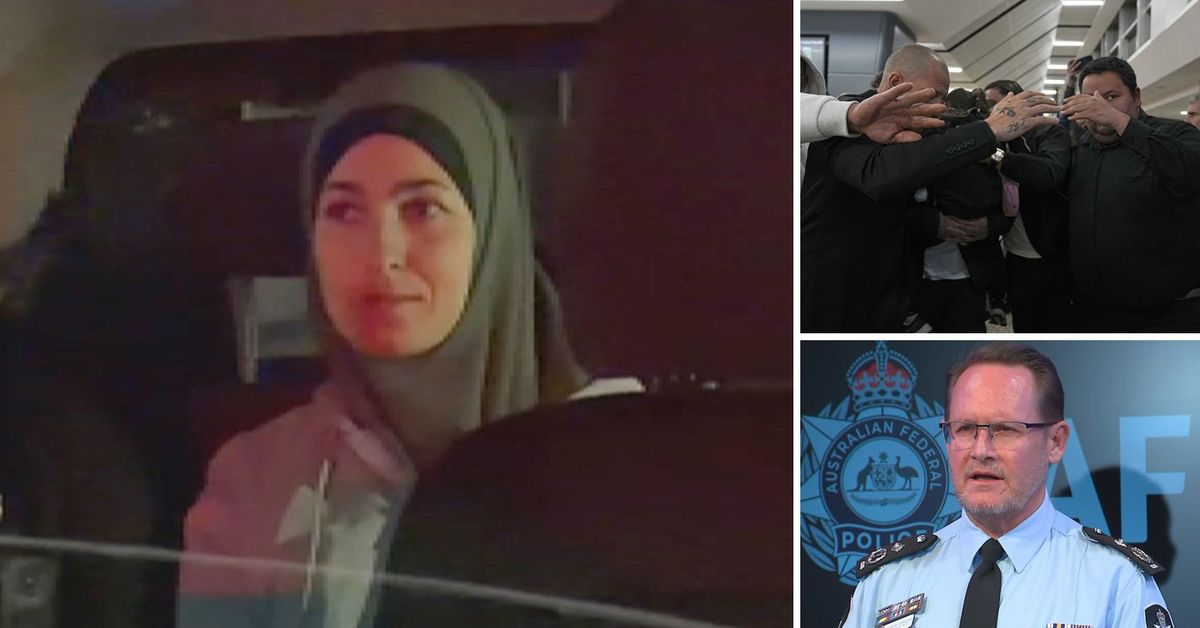
Two women with links to ISIS are expected to be charged with crimes against humanity and another will be accused of belonging to a terrorist group after their long-speculated return to Australia.Police arrested two women, aged 53 and 31, when they landed at Melbourne Airport tonight and a third – 32-year-old Janai Safar, who was travelling with her nine-year-old son – in Sydney.AFP Assistant Commissioner Counter Terrorism Stephen Nutt said the older woman was expected to be charged with four crimes against humanity of enslavement, possessing a slave, and using and engaging in slave trading, while the 31-year-old would be accused of enslavement and using a slave. Janai Safar arrives at Mascot Police Station. (Nine)They all carry 25-year jail terms if proven.Nutt said the 32-year-old who landed in Sydney was expected to be charged with entering or remaining in a declared area and being a member of a terrorist organisation.The return of four women commonly described as “ISIS brides” and nine children, who had spent years living in Syria’s Al-Roj refugee camp, sparked major police operations at Melbourne and Sydney airports tonight, following weeks of heated on-and-off political debate.The cohort who followed their ISIS partners to Syria more than a decade ago have faced a long journey in their return to Australia.The women and their children have been held in refugee camps in north-eastern Syria for years, following the collapse of ISIS, and recently failed in an attempt to leave the camp for Australia earlier this year.The families left the notorious Al-Roj camp for the Syrian capital in their second bid to return to Australia nearly two weeks ago, and had been waiting in limbo in Damascus since.AFP Assistant Commissioner Counter Terrorism Stephen Nutt addresses the media. (9News)On Wednesday, the Australian government confirmed the group had booked flights to Australia.The women were looking forward to drinking a latte on Melbourne’s Collins Street, according to an ABC journalist on the flight from Doha who spoke to the women before boarding.Some of the children reportedly have Australian accents, despite being born in Syria and never setting foot in Australia.The Australian government insists it has not helped the group return to Australia.A woman associated with Islamic State is shielded as she arrives at Melbourne Airport. (Getty)Former immigration department deputy secretary Abul Rizvi said there was no doubt the government had been “involved in the sense that they’ve had people monitoring these groups”.”Moreover, when they applied for passports, those passports would have been processed … so in that sense the government was involved,” he said.”The distinction I think the government is making is they were not involved in the repatriation. They did not arrange or pay for these people to return.”The opposition had called for the government to cancel their travel documents or make a temporary exclusion order to keep the entire cohort out of the country but the government argued that as Australian citizens they were allowed to travel.Janai Safar was travelling with her nine-year-old son. (Nine)Prime Minister Anthony Albanese and other ministers repeatedly urged the women not to return to Australia.Nutt tonight said whether or not the alleged crimes rose to a level that would justify a temporary exclusion order was a matter for the Home Affairs Department.Nationals Senator Bridget McKenzie and independent Senator David Pocock provided an example of the debate this morning on Today.McKenzie said there were “serious concerns” around the group of women, and claimed the children were “already radicalised”.A group of supporters shield recently arrived people with links to Islamic State as they arrive at Melbourne Airport. (Getty)”I want to know why the government hasn’t cancelled their travel documents under national security grounds,” she said.Pocock pointed out the women were Australian citizens, but that nonetheless the public expected “the full force of the law” to be enacted but argued “Australian children deserve a second chance”.He said it was preferable that the group be in Australia where they could face legal repercussions and de-radicalisation programs, but McKenzie claimed the programs had a low success rate.A group of supporters shield recently arrived people with links to Islamic State as they move into a bus outside Melbourne Airport. (Getty)”I think the thing we really have to distinguish between, is grown adults, and children who have had no say in going overseas,” Pocock said.The women arrested tonight could face court as early as tomorrow if they are charged tonight.NEVER MISS A STORY: Get your breaking news and exclusive stories first by following us across all platforms.


Source link