DAILY NEWS

Stay Ahead, Stay Informed – Every Day

Advertisement
Current Trends Explained: ‘Omoggle,’ the Canvas Hack, and Text Songs


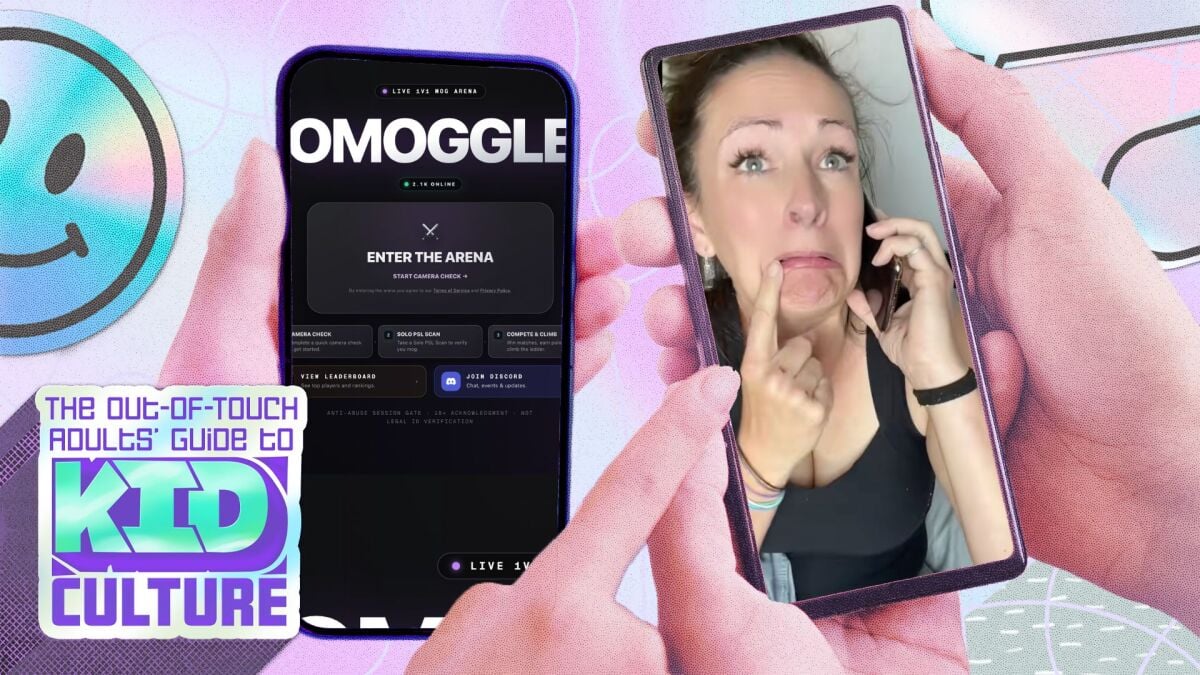
This week’s Out-of-Touch guide explains the online mogging competition that is Omoggle and examines who was behind a hack that brought learning to a screeching halt nationwide. We also look at a viral AI music trend, and discuss how technology we use every day might kill us all. Mogging get organized on OmoggleThe Omoggle website is blowing up. As you can read in my glossary of Gen A and Gen Z slang, “mogging” is the act of being more attractive than someone else, usually in an intentional or aggressive way: If you’re a young gentleman having a conversation with a woman, and a more handsome young man stands next to you and takes over, you have officially been mogged. Omoggle gamifies that conflict of attractiveness. It’s a player-vs.-player contest where a user uploads a picture of their face and pits it against another user. An AI then analyzes the competitors’ features to determine who has been mogged and who has done the mogging. It may be named after defunct chat site Omegle, but Omoggle is more like Hot or Not. Except it’s more disturbing because the winner of the attractive-off isn’t determined by other users’ votes, but by an AI that was programmed to reinforce incel ideas. Over the last 10 years or so, incels and manosphere types have developed and spread a massive, ad-hoc, shared delusion about what women find attractive. Despite being a self-selected group of men who don’t relate well to women, incels believe they understand what women find attractive better than women themselves. All women, the theory goes, are looking for a specific set of facial features—a thick jaw, high cheekbones, etc.—and if you don’t have them, you have no chance, so why try? Omoggle is really part of incels’ ongoing effort to convince themselves that the reason women won’t talk to them is because the geometry of their Canthal Tilt is off, not because they’re creepy weirdos.
School computers went down across the country last week A website going down temporarily is probably a minor inconvenience to us older people, but when Canvas went down this week, right in the middle of finals, it was a full-life disruption for many in Generations Z and A. Canvas is the learning management system that controls just about every college and high school in the country’s schedules, homework, grades, and more, so hackers taking it out pretty much shut down academia. The hacker group responsible, called ShinyHunters, threatened to release user information if an unspecified ransom wasn’t paid, but fortunately, the site seems to have beaten the hackers back, and Canvas is functioning again—but for how long? Shinyhunters: the new generation of hackersShinyhunters, the group that pulled off the Canvas hack, took its name from the Pokémon franchise. Shiny Pokémon are rare, and according to security experts, Shinyhunters seem to focus on rare data. The group is thought to be part of a large affiliation of younger hackers called “The Com” who are mostly from the U.S. and the UK. While other groups within The Com collaborate with Russian ransomware groups, Shinyhunters don’t. They’re about data leak extortion, i.e.: “We’ll release all this data if you don’t pay us” instead of the usual ransomware’s message of “we locked your systems and will free them when you pay us.” Shinyhunters have been especially active lately, having targeted Ticketmaster, Wattpad, Pixlr, Bonobos, BigBasket, Mathway, Unacademy, MeetMindful, and more. Viral videos of the week: text songsArtificial intelligence’s takeover of all human endeavors continues. The latest evidence: the popularity of “text songs” videos on TikTok. The concept is simple: You enter text conversations as lyrics into song generation engines like Suno or Udio, make it into a song and video, and make people laugh. While there are lots of different musical styles represented in these videos, gospel tends to work best; maybe it’s the contrast of the mundanity of the text messages with the dramatic nature of the music. Here are a few examples:

Bonus: Because I sometimes have funny conversations with my teenage child, I made my own.

What do you think so far?

If you’d like to listen to a computer sing to you all day, check out the SongText hashtag where you can find almost 30,000 more examples. Reddit discusses technological nightmaresAI sure is fun, isn’t it? Unrelated: Young people spend a lot of time thinking about how the technology we’ve already developed will likely kill us in the near future. It’s not necessarily that there’s more anxiety now than when you were young, but there are more options. Realistically, you only had to worry about nukes falling, but, judging by this Reddit thread, young people are worried about hundreds of different kinds of technological nightmares that might happen in the next few years or tomorrow afternoon, including:I could literally go on all day, but I won’t. You can read the thread yourself if you lack things to worry about.

Source link

The Insta360 Go Ultra Vlogger Bundle Is Nearly $90 Off Right Now


We may earn a commission from links on this page.
Deal pricing and availability subject to change after time of publication.

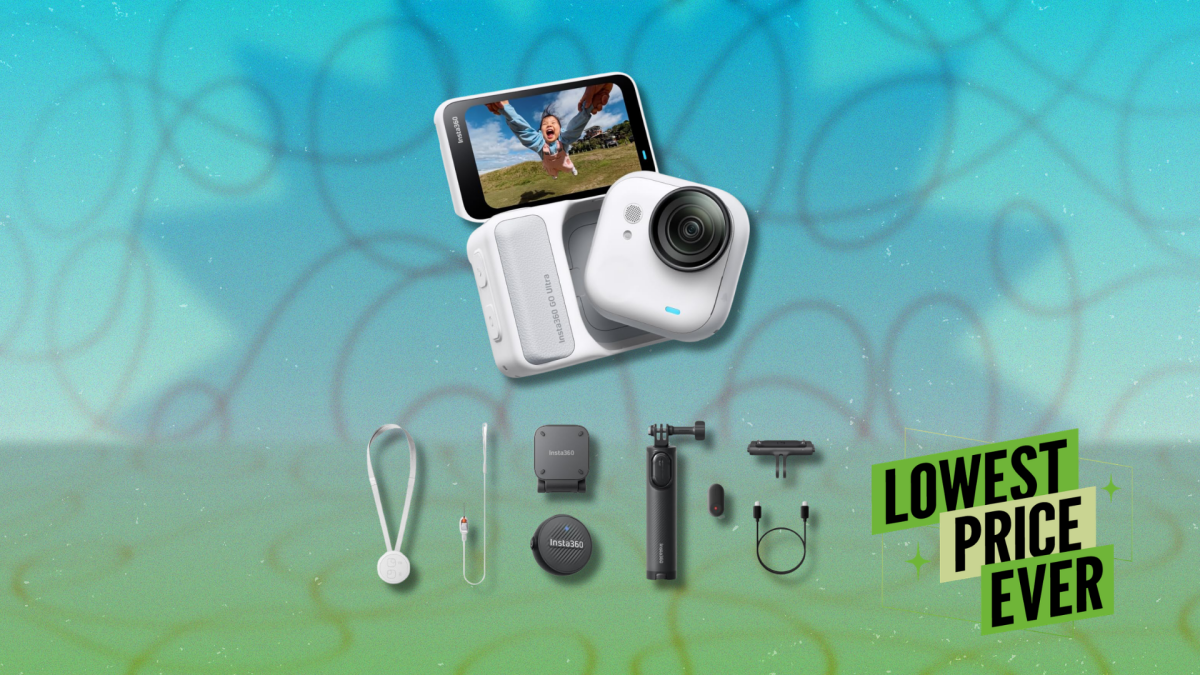
At $484.99, the Insta360 Go Ultra Vlogger Bundle has dropped from its usual $574 price, and according to price trackers, this is the lowest it has been so far. The whole idea behind the Go Ultra is convenience. The camera itself is tiny enough to wear on a shirt, as a magnetic pendant, or as a hat clip without constantly reminding you it’s there. Then, when you want something that feels more like a traditional action camera, it docks into the included Action Pod, which has a larger screen and an extra battery, notes this PCMag review.
The camera shoots stabilized 4K video at 60fps, and the larger 1/1.28-inch sensor helps noticeably indoors or during evening shoots, where smaller action cameras often turn footage muddy fast. Stabilization is also one of the better parts of the experience. Walking footage stays smooth without requiring much effort, so it works well for bike rides, city walks, festivals, or travel clips where carrying a gimbal would feel excessive. And if framing starts becoming a problem, you can just dock it into the Action Pod and use its 2.5-inch flip-up touchscreen, which makes it much easier to see yourself while recording.Video tops out at eight-bit color, so creators who spend a lot of time color-grading footage may find it more limiting than larger action cameras from DJI or GoPro. There’s also no built-in storage, meaning you’ll need to pick up a microSD card separately before you can start shooting. Battery life changes quite a bit depending on how you use the system, too—the standalone camera lasts roughly 30 to 36 minutes at 4K60 before heat starts becoming a factor, while the Action Pod pushes total usage much closer to two hours. And as for its audio quality, it’s decent for casual clips and quick vlogs, but wind noise and distance can still affect recordings, unless you rely on the included mic transmitter or external audio gear.

What do you think so far?

Still, the bundle is generous—along with the camera and Action Pod, you get a magnetic pendant, quick-release mounts, a mini tripod remote kit, a magnetic clip, and a Mic Air transmitter for better audio options. For creators who constantly move between casual recording and more deliberate filming, the setup feels more versatile than most compact action cameras.

Our Best Editor-Vetted Tech Deals Right Now

Deals are selected by our commerce team


Source link

Zadie Smith on the Courage to Be More Than Yourself – The Marginalian


Every act of learning is an act of intellectual appropriation, incorporating someone else’s knowledge into your own mental library. Every act of empathy is an act of emotional appropriation, modeling the reality of another into your own in order to fathom it. I have appropriated the English language — not my native — in order to write these words.
The tyranny of our time is that, because the hero of the modern myth is the victim, our catalogue of ways to be wounded has swelled to untenable proportions. The arsenal of possible offenses is so immense that we are left in a state of paralyzing hyper-vigilance, ever on the defensive, ever trying to preempt grievance and avoid indictment. Because it is hard to create from a defensive place, no region of life has suffered more by this than our arts — trembling before the whip of cultural appropriation, artists are left with narrower and narrower parameters of permission for whom and what they can imagine. We seem to have forgotten that the word empathy itself is just a little over a century old, invented by Rilke and Rodin to describe the imaginative act of projecting yourself into a work of art that represents something other than yourself. We seem to have forgotten that, at its best, art is not a mirror but a kaleidoscope, casting on the walls of our own lives a thousand hues of experience we never could have lived. As a little girl in the mountains of Bulgaria in the early 1990s, I would have never known what it is like to be a little boy in the prairies of North America in the early 1900s had I not read a German woman’s novel about a Lakota father and son. You may never know what it is like to be the long-suffering wife of a Siberian serf, but you have Dostoyevsky.
Troubled by this tyrannical paralysis, Zadie Smith offers an antidote of uncommon potency and poignancy in one of the essays collected in Dead and Alive (public library), anchored in a recognition of the absurdity of turning identities into warfare given how mutable the self is, how inconstant, how tessellated a thing to begin with. She writes:
I’ve always been aware of being an inconsistent personality. Of having a lot of contradictory voices knocking around my head. As a kid, I was ashamed of it. Other people seemed to feel strongly about themselves, to know exactly who they were. I was never like that. I could never shake the suspicion that everything about me was the consequence of a series of improbable accidents — not least of which was the 400-trillion-to-one accident of my birth. As I saw it, even my strongest feelings and convictions might easily be otherwise, had I been the child of the next family down the hall, or the child of another century, another country, another God.
Art from An Almanac of Birds: Divinations for Uncertain Days. (Available as a print and as stationery cards, benefitting the Audubon Society.)
An epoch after Walt Whitman — a person utterly unlike her by all the unchosen variables we mistake for personhood — celebrated his contradictory multitudes, she considers the making of her own, borrowed from the lives of others, real and imagined:
I rarely entered a friend’s home without wondering what it might be like to never leave. That is, what it would be like to be Polish or Ghanaian or Irish or Bengali, to be richer or poorer, to say these prayers or hold those politics. I was an equal-opportunity voyeur. I wanted to know what it was like to be everybody. Above all, I wondered what it would be like to believe the sorts of things I didn’t believe… And what I did in life, I did with books. I lived in them and felt them live in me. I felt I was Jane Eyre and Celie and Mr Biswas and David Copperfield. Our autobiographical coordinates rarely matched. I’d never had a friend die of consumption or been raped by my father or lived in Trinidad or the Deep South or the nineteenth century. But I’d been sad and lost, sometimes desperate, often confused. It was on the basis of such flimsy emotional clues that I found myself feeling with these imaginary strangers: feeling with them, for them, alongside them and through them, extrapolating from my own emotions, which, though strikingly minor when compared to the high dramas of fiction, still bore some relation to them, as all human feelings do. The voices of characters joined the ranks of all the other voices inside me, serving to make the idea of my “own voice” indistinct. Or maybe it’s better to say: I’ve never believed myself to have a voice entirely separate from the many voices I hear, read, and internalize every day.
Art by Beatrice Alemagna from A Velocity of Being: Letters to a Young Reader.
But if the purpose of art is to offer us, in Iris Murdoch’s perfect phrase, “an occasion for unselfing,” then it is not a defect but a natural advantage for an artist to have so unbounded a self, to be so indiscriminately curious about the interiority of other lives, about even the remotest reaches of possible experience. She offers an alternative to our culture’s antagonistic model of interpersonal curiosity:
What would our debates about fiction look like, I sometimes wonder, if our preferred verbal container for the phenomenon of writing about others was not “cultural appropriation” but rather “interpersonal voyeurism” or “profound other-fascination” or even “cross-epidermal reanimation”? Our discussions would still be vibrant, perhaps even still furious — but I’m certain they would not be the same. Aren’t we a little too passive in the face of inherited concepts? We allow them to think for us, and to stand as place markers when we can’t be bothered to think… I do believe a writer’s task is to think for herself, although this task, to me, signifies not a fixed state but a continual process: thinking things afresh, each time, in each new situation. This requires not a little mental flexibility. No piety of the culture… should or ever can be entirely fixed in place or protected from the currents of history. There is always the potential for radical change.
Art by Rockwell Kent for a rare 1937 edition of Leaves of Grass. (Available as a print and more.)
Invoking Whitman’s timeless exhortation to “re-examine all you have been told at school or church or in any book [and] dismiss whatever insults your own soul,” she adds:
Full disclosure: what insults my soul is the idea — popular in the culture just now, and presented in widely variant degrees of complexity — that we can and should write only about people who are fundamentally “like” us: racially, sexually, genetically, nationally, politically, personally. That only an intimate authorial autobiographical connection with a character can be the rightful basis of a fiction. I do not believe that. I could not have written a single one of my books if I did.
What a lovely reminder that art’s invitation to imagine what it is like to be another is precisely what allows us to discover the doom and glory of who we are and what we are. What a lovely insistence that far greater than the courage to be yourself is the courage to be more-than-yourself, the courage to remember that but a thin veil woven of chance events stretching all the way back to the Big Bang falls between you and not-you, a veil we have found a way of parting — literature — in order to allay the fundamental loneliness, isolation, and plain tedium of the self.


Source link