DAILY NEWS

Stay Ahead, Stay Informed – Every Day

Advertisement
Democrats look for a foothold in Iowa as Vance visits to boost GOP candidate


DES MOINES, Iowa (AP) — After years of coming up short, Democrats think they can make Iowa a political battleground again.
Republican Donald Trump may have won the state by double digits in the last presidential election, but growing dissatisfaction with his leadership and rising costs from the Iran war could help set the stage for Democrats to make previously unattainable gains.
WATCH: Which states to watch as the battle for Senate control heats up ahead of 2026 midterms
Iowa Democrats plan to have 60 field organizers on the ground by June, nearly double from eight years ago during the midterm elections of Trump’s first term. Another two dozen people will staff a coordinated campaign that’s intended to support candidates for governor, U.S. House and U.S. Senate, among others.

“Iowa is still, in my view, a purple state,” state party chair Rita Hart said in an interview. “We just haven’t given them an opportunity to show that lately.”
Republicans insist that Iowa will remain red, but White House travel plans suggest there may be some concern. Vice President JD Vance is visiting on Tuesday to support Rep. Zach Nunn, who represents Des Moines, its suburbs and the state’s rural center. Trump also chose Iowa as his first stop when he began his midterm campaigning earlier this year.
Iowa has an unusual number of competitive races for open seats this year, with Republican Gov. Kim Reynolds and Republican Sen. Joni Ernst both opting out of reelection bids.
Leading what Hart called “the best statewide ticket we’ve had for a generation” is Rob Sand, the state auditor running for governor. He ended last year with $13 million in his campaign account, and he often highlights his rural roots, Christian faith and bowhunting prowess, as well as a disdain for partisan politics, to try to appeal to Iowans of all backgrounds.
Josh Turek and Zach Wahls, both state lawmakers, are seeking the Democratic nomination for U.S. Senate in the June 2 primary. The party is also targeting three of the four Republican-held U.S. House seats.
Democrats focus on cost of living
Democrats believe a populist economic message could resonate in Iowa when farmers are squeezed by tariffs and face higher prices for fertilizer and diesel fuel. In addition, hundreds of people have lost jobs as factories and meat processors shut down, and rural residents are driving further to see doctors as healthcare clinics close.
This year’s candidates are also willing to take swings at their own party, even though they will likely benefit from campaign spending by national organizations.
Turek and Wahls say Democrats have abandoned the rural and small-town voters who placed hope in Trump to change the status quo. Turek, who calls himself a “prairie populist,” says there are too many millionaires in Congress who don’t know what it is to live paycheck to paycheck. Wahls, endorsed by several labor unions, says corruption in politics benefits corporate interests over working people.
Christina Bohannan, who is running for a third time to unseat Republican U.S. Rep. Mariannette Miller-Meeks in a southeast Iowa district, said both major political parties “have failed to really fight for working people.”
“Everybody’s talking about affordability,” she said. “I don’t want it just to become a catchphrase that people can kind of just brush aside as political rhetoric. This is real.”
Sand targets the entire political system, which he said “helps incumbents get reelected, rather than actually forcing them to solve our problems.” He recently introduced policy proposals, including term limits, bans on stock trading while in office, and open primaries.
Republicans say Democrats remain out of touch
Before Trump’s dominance in the region, it wasn’t uncommon to find Democrats representing the Midwest and Plains states in governors’ mansions or in Congress. Trump’s promises to resurrect American manufacturing jobs and “drain the swamp” won over voters who traditionally supported populist Democrats, said Iowa Democratic strategist Jeff Link.
“Because the knee-jerk reaction to Trump is to be the opposite of Trump, we went away from economic populism to our detriment,” Link said. “By just being anti-Trump, it is being condescending towards people that chose him three times.”
Tom Harkin, a former Democratic senator from Iowa, said Trump’s stumbles have created an opportunity for change.
“I think a lot of people wanted to get things shaken up a little bit,” he said. “But I don’t think they wanted them shaken up like this.”
Harkin said his party has an opportunity to rebrand itself.
“I think Democrats in the Midwest especially got painted with this broad brush, and we didn’t fight back well enough,” he said. “We became more defensive.”
Republicans argue that Democrats’ left-wing positions remain out of touch with Iowans’ values.
“You can’t have political born-again experiences,” said Jeff Kaufmann, chairman of the Republican Party of Iowa. He said tweaking the message and running away from the national party is not going to “erase your history in one election cycle.”
Kaufmann acknowledged that the cycle wouldn’t be easy but said Iowans trust Trump’s long game, knowing that he intends for tariffs to protect Iowa farmers and war with Iran to eliminate the country’s nuclear threat. But, he said, it took years for Democrats to lose the Iowa communities that flipped from supporting Barack Obama to backing Trump.
“It’s going to take a long time for them to build it back up again,” Kaufmann said.
Democrats try to rebuild
The political environment for Democrats has been bleak since Obama won the state in 2008 and 2012. Republicans have had total control in the Iowa state government for nearly a decade. All six members of the federal delegation are Republicans.
Democrats also lag Republicans by roughly 200,000 registered voters statewide and run at a deficit in each of the four congressional districts.
READ MORE: Democrat Renee Hardman wins Iowa state Senate seat, blocking GOP from reclaiming supermajority
Iowa Democrats said 7,000 people have signed up over the past year to volunteer for Democratic candidates, and the state party will hold volunteer training sessions. The party has signed leases on eight field offices with plans to open at least seven more, including in blue-collar areas in eastern Iowa along the Mississippi River that supported Obama before pivoting to Trump.
“We’re investing so much in these organizers and in our county parties and supporting and training our volunteers,” Hart said. “It’s through these kinds of conversations where we build trust with voters.”
Senior leaders expect their spending this cycle to be on par with presidential years, reaching the high seven figures. They’re also pivoting from text messages and digital advertising to face-to-face conversations.
“Since the pandemic, we’ve really struggled with getting back to the basics with person-to-person communication,” Hart said, adding, “We’ve got to get back to that.”

A free press is a cornerstone of a healthy democracy.

Support trusted journalism and civil dialogue.

Donate now


Source link
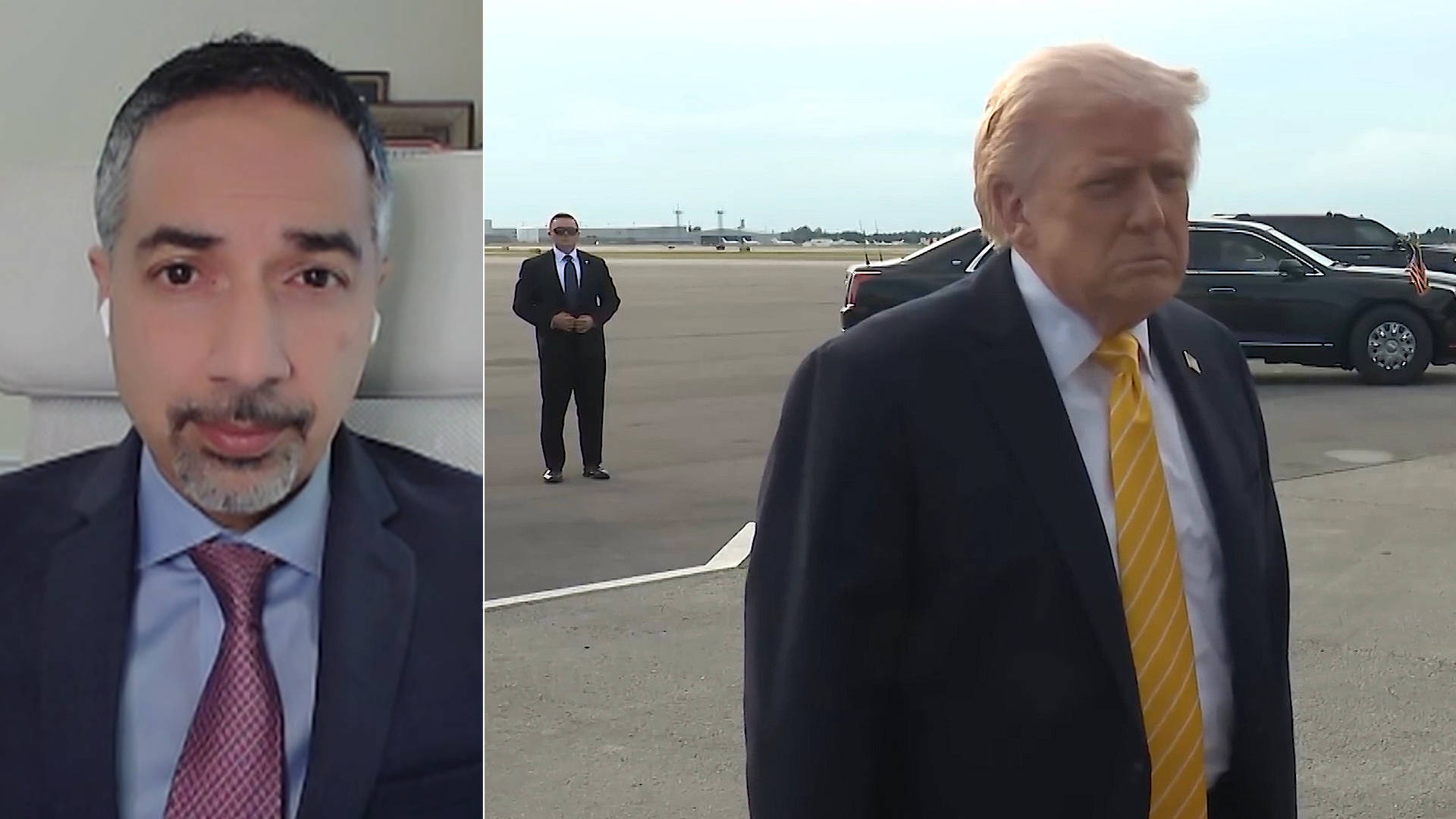
Trita Parsi on Iran War: Trump Still “Looking for a Silver Bullet” Instead of Negotiating Seriously


This is a rush transcript. Copy may not be in its final form.AMY GOODMAN: This is Democracy Now!, democracynow.org, The War and Peace Report. I’m Amy Goodman.
Two missiles hit a U.S. Navy vessel in the Strait of Hormuz earlier today after it ignored warnings from Iran’s Revolutionary Guard to halt. That’s according to the Iranian state media. But the U.S. says no vessel was struck.
This comes as President Trump announced the U.S. will begin guiding ships through the Strait of Hormuz starting today, deploying guided-missile destroyers, more than a hundred aircraft and 15,000 U.S. service members. Tehran immediately rejected the move. A senior Iranian official warned any U.S. interference in the strait would be considered a ceasefire violation.
President Trump said he had reviewed Iran’s 14-point peace proposal, but warned the U.S. could resume strikes. Iran’s foreign minister said a deal is “just inches away,” but accused U.S. negotiators of making “maximalist demands.” No further talks have been scheduled.
At least two other vessels apparently were also struck in the Strait of Hormuz over the weekend, though all crew members were reported safe.
Meanwhile, U.S. gas prices have now reached $4.45 a gallon, up nearly 50% since the war began.
According to Iran’s Ministry of Health, U.S.-Israeli strikes have killed close to 3,400 people, including 376 children. The U.S. military has confirmed 13 combat deaths and 381 service members wounded.
This is President Trump speaking in Florida Friday.
PRESIDENT DONALD TRUMP: We get the radical left to say, “We’re not winning. We’re not winning.” They don’t have any military left. It’s unbelievable. It’s actually — it’s actually — I believe it’s treasonous, OK? You want to know the truth? It’s treasonous.
AMY GOODMAN: President Trump saying it’s treasonous to say that the U.S. is not winning the war on Iran.
For more, we go to Washington, D.C., where we’re joined by Trita Parsi, executive vice president of the Quincy Institute for Responsible Statecraft, his latest article headlined “Trump’s Iran blockade snatches defeat from the jaws of victory.” Trita is the author of several books, including Losing an Enemy: Obama, Iran, and the Triumph of Diplomacy.
Trita Parsi, thanks for joining us again.
TRITA PARSI: Thank you.
AMY GOODMAN: Talk about this latest news, right up to when we’re broadcasting, where Iran says they struck a U.S. naval vessel, and the U.S. is denying it, and then President Trump saying that it’s treasonous to criticize what the U.S. is doing.
TRITA PARSI: Thank you for having me, Amy.
Let me first start off by saying, because I think it’s important context, that according to the plan of those who sold this blockade idea to the Trump administration, Iran should have crumbled about 10 days ago, and it clearly has not happened. And I think that’s part of the reason why you see the president increasingly using desperate language and even considering desperate moves, such as moving U.S. warships through the Persian Gulf in order to protect other ships.
It’s important to understand the U.S. Navy has kept itself roughly 3,000 kilometers from Iran’s shorelines throughout the entire war in order to avoid getting hit by any of Iran’s missiles, that potentially could sink a major American warship. So, if the U.S. during the war was unwilling to get that close to the Iranian waters, I find it very unlikely that the U.S. will do so under the current circumstances, knowing very well that that could lead to a major confrontation, a restarting of the war, but perhaps more importantly, it could lead to American servicemen getting killed in a manner and on a scale that we did not see during the war that Trump started. And he was very careful to avoid those type of casualties, knowing very well what that would do to the degree of support that this war has within his own base. So, the idea that he now would go down that path, I find very unlikely. Rather, it is more of a sign of his desperation because this blockade has backfired on him, and he’s trying to do just something in order to be able to turn the tables on the Iranians.
AMY GOODMAN: So, talk about exactly what President Trump is saying will start happening today, this guiding of ships, that he said countries are calling for, that the U.S. military will do, through the Strait of Hormuz.
TRITA PARSI: Well, we don’t know, because all we have is that tweet. It’s very unclear, grammatically incorrect in places, etc. But bottom line is, it’s not clear whether the ships, the American warships, actually would escort these other ships out of the strait or whether it would be simply providing them with instructions on how to navigate different areas in which mines have been planted. So, it’s still unclear. And to me, it looks more like what we have seen in the past, in which Trump makes these big declarations, pretends as if there’s going to be a dramatic shift, but then he backs down, knowing very well that if he actually follows through on it, it will lead to an escalation that he cannot control and that likely will backfire.
AMY GOODMAN: And talk about Iran’s demands, and then Iran saying that the U.S. is making maximalist demands. And who exactly is doing this negotiating?
TRITA PARSI: Well, if we take a look at what has been publicly circulated — and may not be accurate information — clearly, both sides are making maximalist demands. The Iranians are demanding reparations for the war. Now, under other circumstances, perhaps, one would say that that is not unreasonable, mindful of the fact that they were attacked, but nevertheless, vis-à-vis the superpower of the United States, that is a very unlikely demand to be heeded. So, there’s plenty of demands the Iranians are making that likely will never be accepted by the United States. But then there are other things that I think could be part of a workable deal between the two sides.
The question, though, is, as long as Trump insists on demands such as zero enrichment, demands that were sold to him by the Israelis with the design of making sure that any deal would be impossible to reach and that it would force Trump into a military confrontation, as long as Trump continues to listen to those forces, the very same forces that also sold him this blockade that has backfired, we’re not going to see a diplomatic breakthrough. It requires a far more disciplined and flexible approach to the negotiations, and right now we’re not seeing that from either side.
AMY GOODMAN: This is the deputy speaker of the Iranian parliament speaking Sunday about the fate of the Strait of Hormuz.

ALI NIKZAD: (translated) The Zionist regime will under no circumstances be allowed to pass through the Strait of Hormuz. Hostile countries headed by the United States will also not have the right of passage. Other vessels wishing to transit will do so under the law we enact and with authorization obtained from the commander-in-chief and placed at the disposal of our armed forces.

AMY GOODMAN: So, the deputy speaker of the Iranian parliament is talking about a new law they want to pass banning Israeli and U.S. ships through the Strait of Hormuz, Trita Parsi.
TRITA PARSI: Yes. So, again, I think this is part of the maximalist approach that the Iranians are also pursuing. I don’t think that that is going to be what the end result of all of this will be. I do think the Iranians are going to retain control, and there’s going to be some sort of a mechanism in which they will receive payment. It may not be framed as a toll. It may be framed as something else, potentially together with other GCC states, particularly Oman, but I don’t think it’s going to look in such a manner that the Iranians are going to prevent U.S. ships indefinitely from being able to pass through the strait. And I think, again, in some ways, the Iranian maximalist goals or their strategy is just mirror-imaging what Trump is doing. This is Trump’s style. He always throws out maximalist demands publicly, tries to embarrass and humiliate the other side. And the Iranians are essentially mirror-imaging his strategy. Ultimately, however, that is not how you get to a deal.
AMY GOODMAN: OK, the U.S. has also threatened more strikes. Trita Parsi, in this last 30 seconds, where do you see this going this week, as this — in the U.S. population, the U.S. attacks on Iran are fiercely unpopular?
TRITA PARSI: Yes, and Trump knows this, and he knows that his members of Congress from the Republican side are privately making more and more phone calls complaining about this war, complaining about how it is destroying their chances in the November elections. Many of them are going to lose their seats as a result of this. Trump is under a lot of pressure. But he’s still looking for a silver bullet that will make him a winner, instead of engaging in serious diplomacy.
AMY GOODMAN: Trita Parsi, thanks so much for being with us, executive vice president of the Quincy Institute for Responsible Statecraft. Thanks for joining us.
TRITA PARSI: Thank you, Amy.
AMY GOODMAN: That does it for today’s show. A very happy birthday to Denis Moynihan! I’m traveling to Toronto today to speak at the Radiodays North America conference, then will appear at screenings of the new documentary about Democracy Now!, Steal This Story, Please! I will be Thursday night and Friday morning at the Main Cinema in Minneapolis, then in Chicago Friday night and for two screenings on Saturday at the Music Box Theatre, and at the historic Oriental Theatre in Milwaukee on Sunday. For information on all these screening and as well as our travel through the country, go to democracynow.org and StealThisStory.org. I’m Amy Goodman, in New York today. Thanks so much for joining us.


Source link

US military rejects claims Iran struck US Navy vessel


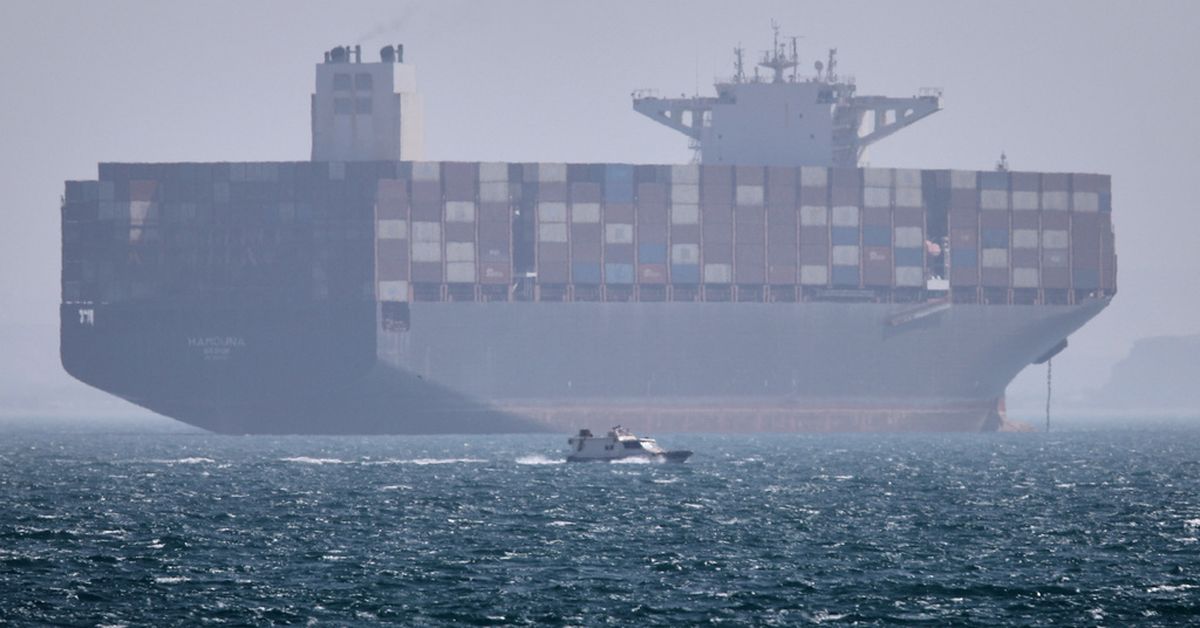
The US military says two American-flagged merchant ships have successfully transited the Strait of Hormuz after it launched a new plan to restore traffic.US President Donald Trump’s new initiative to break Iran’s chokehold has escalated the standoff. The US military denied Iran’s claims that it had struck an American Navy vessel.Iran’s effective closure of the strait since February has caused a spike in worldwide fuel prices and rattled the global economy. As part of Trump’s latest effort to reopen it, the US-led Joint Maritime Information Centre advised ships to cross the strait in Oman’s waters, saying it set up an “enhanced security area”.A container ship sits at anchor as a small motorboat passes in the foreground in the Strait of Hormuz off Bandar Abbas, Iran, Saturday, May 2, 2026. (Amirhosein Khorgooi/ISNA via AP)It was unclear whether shipping companies, and their insurers, will feel comfortable taking the risk given that Iran has fired on ships in the waterway and vowed to keep doing so. Hundreds of ships have been bottled up in the Persian Gulf for weeks.Iran has said the new US effort is a violation of the fragile ceasefire that has held for more than three weeks. Its control of the strait is a major source of leverage, allowing it to inflict pain on the global economy despite being outgunned on the battlefield.Trump warns of ‘forceful’ response if Iran interferesThe US military’s Central Command said the two American-flagged merchant ships were “safely headed on their journey” after transiting the Strait of Hormuz. It said Navy guided-missile destroyers in the Persian Gulf were helping to restore traffic.Its statement on X said that US destroyers had also transited the strait. It did not say when the Navy ships arrived or when the merchant vessels departed.Trump’s announcement on Sunday (early Monday AEST) that the US would “guide” ships out of the strait warned that Iranian efforts to block them “will, unfortunately, have to be dealt with forcefully”.He described “program Freedom” in humanitarian terms, designed to aid stranded seafarers, many on oil tankers or cargo ships, who have been stuck in the Persian Gulf since the war began.Crews have described to The Associated Press seeing drones and missiles explode more than the waters earlier in the war as their vessels run low on drinking water, food and other supplies.Iran’s state-run IRNA news agency called the effort part of Trump’s “delirium”.Guided-missile destroyer USS Mason (DDG 87) sails regional waters within the US Central Command area of responsibility. (US Central Command)Iran stands firm on its grip of the straitIran’s military command on Monday said ships passing through the strait must coordinate with them.”We warn that any foreign military force — especially the aggressive US military — that intends to approach or enter the Strait of Hormuz will be targeted,” Major General Pilot Ali Abdollahi told state broadcaster IRIB.The disruption of the waterway has squeezed countries in Europe and Asia that depend on Persian Gulf oil and gas, raising prices far beyond the region.Trump has promised to bring down gas prices as he faces midterm elections this year.The US has warned shipping companies they could face sanctions for paying Iran for transit of the strait.A bulk cargo ship sits at anchor in the Strait of Hormuz off Bandar Abbas, Iran, Saturday, May 2, 2026. (Amirhosein Khorgooi/ISNA via AP)The Joint Maritime Information Centre urged mariners to coordinate closely with authorities in Oman, an Arab state that shares the strait with Iran, “due to anticipated high traffic volume”.It warned that passing close to usual routes “should be considered extremely hazardous due to the presence of mines that have not been fully surveyed and mitigated”.The head of security for the Baltic and International Maritime Council, a leading shipping trade group, said no formal guidance or details about the US effort had been issued to the industry. Jakob Larsen questioned whether the effort was sustainable and said there is a “risk of hostilities breaking out again” if it goes ahead.The United Arab Emirates accused Iran of targeting a tanker linked to its main oil company with two drones as it passed through the strait. It did not say when the attack took place. No injuries were reported.ADNOC Logistics & Services, an affiliate of the oil company, said on X that the ship was not carrying any cargo when it was hit off the coast of Oman.An Iranian tugboat floats in the foreground as cargo ships sit at anchor in the Strait of Hormuz off Bandar Abbas, Iran, Monday, May 4, 2026. (Amirhosein Khorgooi/ISNA via AP)US military denies that Iran struck one of its shipsIranian news agencies, including the semi-official Fars and ILNA, reported on Monday that Iran struck a US vessel near an Iranian port southeast of the strait, accusing it of “violating maritime security and navigation norms”. The reports said the vessel was forced to turn back.US Central Command said on X that “no US Navy ships have been struck”.The US has enforced a naval blockade on Iranian ports since April 13, telling at least 49 commercial ships to turn back, according to Central Command.The blockade has deprived Tehran of oil revenue it needs to shore up its ailing economy. US officials have expressed hope that the blockade forces Iran to make concessions in talks to end the war.NEVER MISS A STORY: Get your breaking news and exclusive stories first by following us across all platforms.


Source link